Artificial intelligence is becoming a part of everyday work, from document preparation to data analysis and decision support. But with the increasing use of AI, more professionals ask themselves: What does “good” AI-assisted work look like, and who defines this standard?
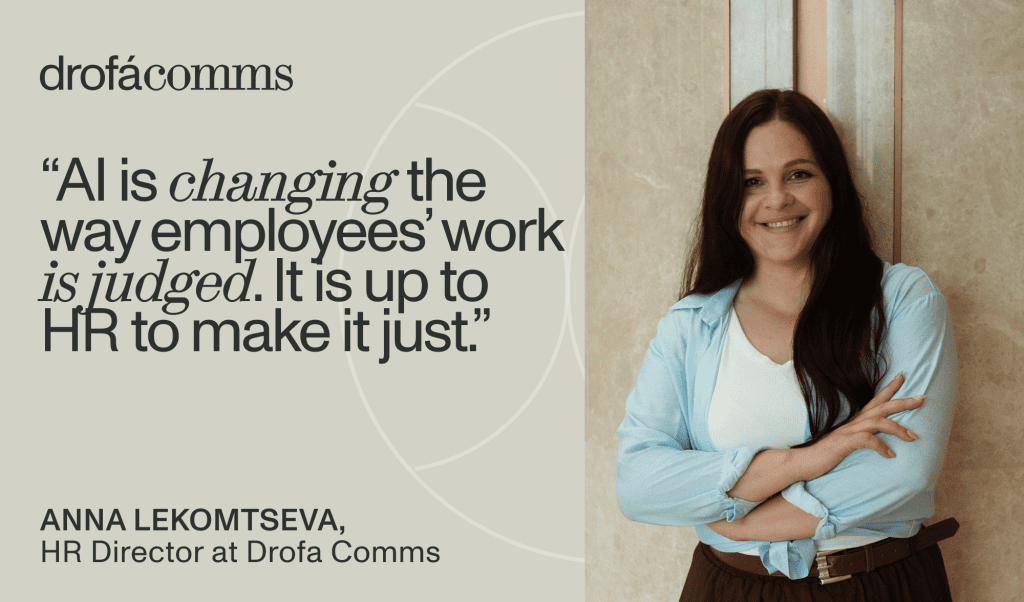
In her article for HR Magazine, entitled “How HR can define what good AI-assisted work looks like,” Anna Lekomtseva, our HR Director, raises an important issue. Today, many organisations use AI tools, but they often lack a common understanding of what constitutes a high-quality result in AI-assisted work. This creates a gap between the expectations of managers, employees, and HR.
HR plays a key role in this situation. It is the HR management function that can set the framework for “good AI-assisted work”, including:
- defining the principles of using AI in work processes;
- formation of criteria for the quality of results created with the participation of AI;
- implementation of transparent rules of verification and human control;
- development of AI literacy among employees.
It is important not to prohibit or ignore AI, but to learn how to take it into account correctly. Then the focus shifts from the question “did the employee use AI” to the question “how did they work with it and how consciously did they make decisions”.
The article also points to another important point — trust within the team. If there are no rules, people start hiding the use of AI or, conversely, overestimating its role. Clear and understandable approaches help to avoid this.
This way, HR’s task today is to form a new work norm where technology enhances a person, but does not replace professional judgment.