An AI-generated description of your company may tell you exactly what you expect to hear. It can present your services, expertise and achievements in a convincing way. But that answer cannot tell you whether clients, partners or journalists see your business through the same lens.
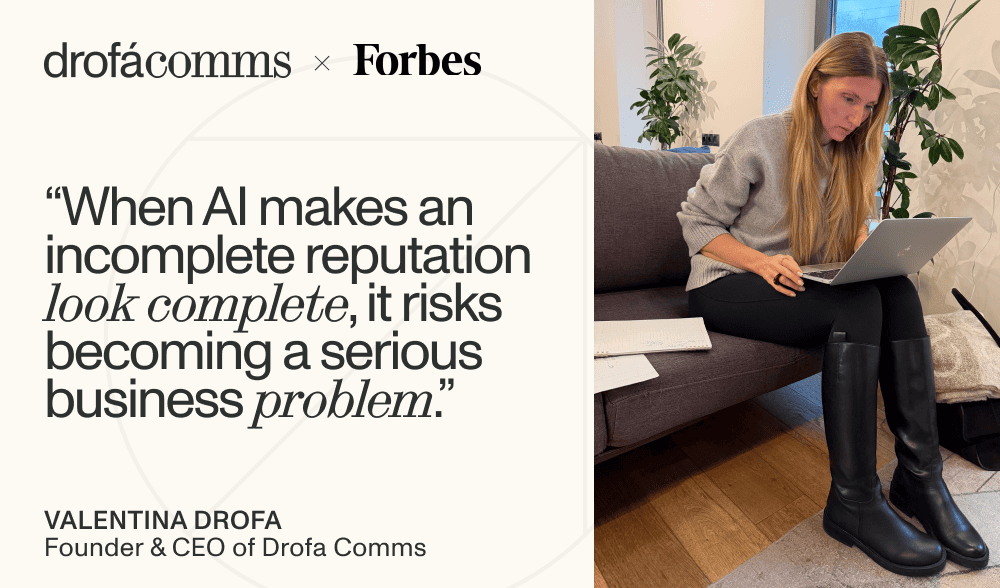
This is the AI reputation trap that Valentina Drofa, Founder and CEO of Drofa Comms, examines in her latest op-ed for Forbes Business Council.
She argues that founders should be cautious when using AI to assess their company’s reputation. An answer may reflect what a business has published about itself, while leaving an important question unanswered: does the market associate the company with the same expertise?
Why AI Answers Can Give Founders a False Sense of Confidence
When researching competitors with AI, business leaders may examine the answers critically. They might check the sources, look for missing information and compare the response with what they already know.
But when they ask about their own company and receive a description that matches their expectations, they may be more inclined to accept it.
As Valentina explains, AI can draw on a company’s website, social media posts and press releases to produce a coherent picture of the business. That picture, however, does not necessarily show whether the target audience has noticed those messages or shares the company’s view of its position in the market.
For example, a business may have a strong product, while potential customers still struggle to understand how it differs from competing solutions. If its founders rely on a reassuring AI answer, they could overlook gaps in their communications and miss opportunities to build recognition.
How Founders Can Use AI to Examine Their Company’s Reputation
Valentina suggests asking AI more challenging questions instead of simply requesting a description of the company. These could include:
- What would a potential client or journalist think the company is best known for?
- What is still unclear from the information available?
- What appears to be missing from the company’s positioning?
The answers can help founders identify gaps in their public communications. They should also examine the sources behind those answers and compare them with feedback from clients, partners and other audiences.
For Valentina, the goal is to build a reputation that can withstand scrutiny wherever people encounter the business, whether through an AI answer, a media article or a personal recommendation.
Read Valentina Drofa’s full Forbes Business Council op-ed!
For more on the relationship between AI answers and public credibility, read Valentina’s latest op-ed on AI search visibility and reputation.