The Missing Piece: Building Secondary Markets
The discussions at RWA Summit highlighted the disparity between issuing tokenised assets and creating actual liquidity around them. The checklist above outlines what these assets need to support a functioning market. But how can these conditions be met in reality, and what does it actually take to make tokenised assets tradable on a massive scale?
This is precisely what Vladimir Tikhomirov, Co-Founder of Algebra and Founder of Theorem, who also attended RWA Summit Singapore 2026, has been working on. He has been involved in the development of secondary trading venues for tokenised assets. And when asked what it takes to turn these assets into instruments that investors can actually trade, he puts it bluntly:
“First and foremost, tokenised assets need an audience — people who genuinely want to purchase them. Once real demand emerges, secondary markets begin to develop naturally, as more and more people look to trade and sell those assets.”
Initially, Tikhomirov explained, issuers themselves can provide liquidity, giving investors confidence that they can sell their holdings when needed. As demand grows, other market participants have a financial incentive to provide liquidity as well.
Yet secondary trading serves another purpose. Without regular transactions, determining a reliable market price for tokenised assets can be difficult, particularly when those assets are used as collateral in DeFi.
“Those same markets can also help establish a fairer price for an asset, as it would be determined by the market participants themselves. Issuers, in turn, could adjust their initial pricing to better align with market realities.”
This would also make it easier to assess collateral and liquidate positions when their value falls. But even a market with sufficient buyers and sellers may struggle with a problem of ensuring that transactions comply with the restrictions attached to the assets.
“Right now, however, many of these restrictions still exist only on paper. An issuer’s website might state, for example, that U.S. investors are prohibited from purchasing a particular asset — and yet, from a technical standpoint, no actual mechanisms exist to enforce such a statement.”
Tikhomirov sees this as one of the key issues Theorem aims to address by enforcing the trading conditions set by issuers and the requirements attached to the underlying assets.
2. Then Comes the Financial System. And Its Rulebook.
Imagine a bank accepting tokenised securities as collateral for a loan. The agreement is signed, the tokens are transferred, and everything works exactly as intended.
But what if the borrower goes bankrupt or suddenly loses the ability to pay off debts?
Even though the blockchain still has a record of every transaction, that does not establish who has the legal right to the underlying assets, how the bank can recover its money, or what happens if other creditors come forward with competing claims.
This is the issue that was also largely addressed during the Summit.
A Digital Token Doesn’t Rewrite Ownership Laws
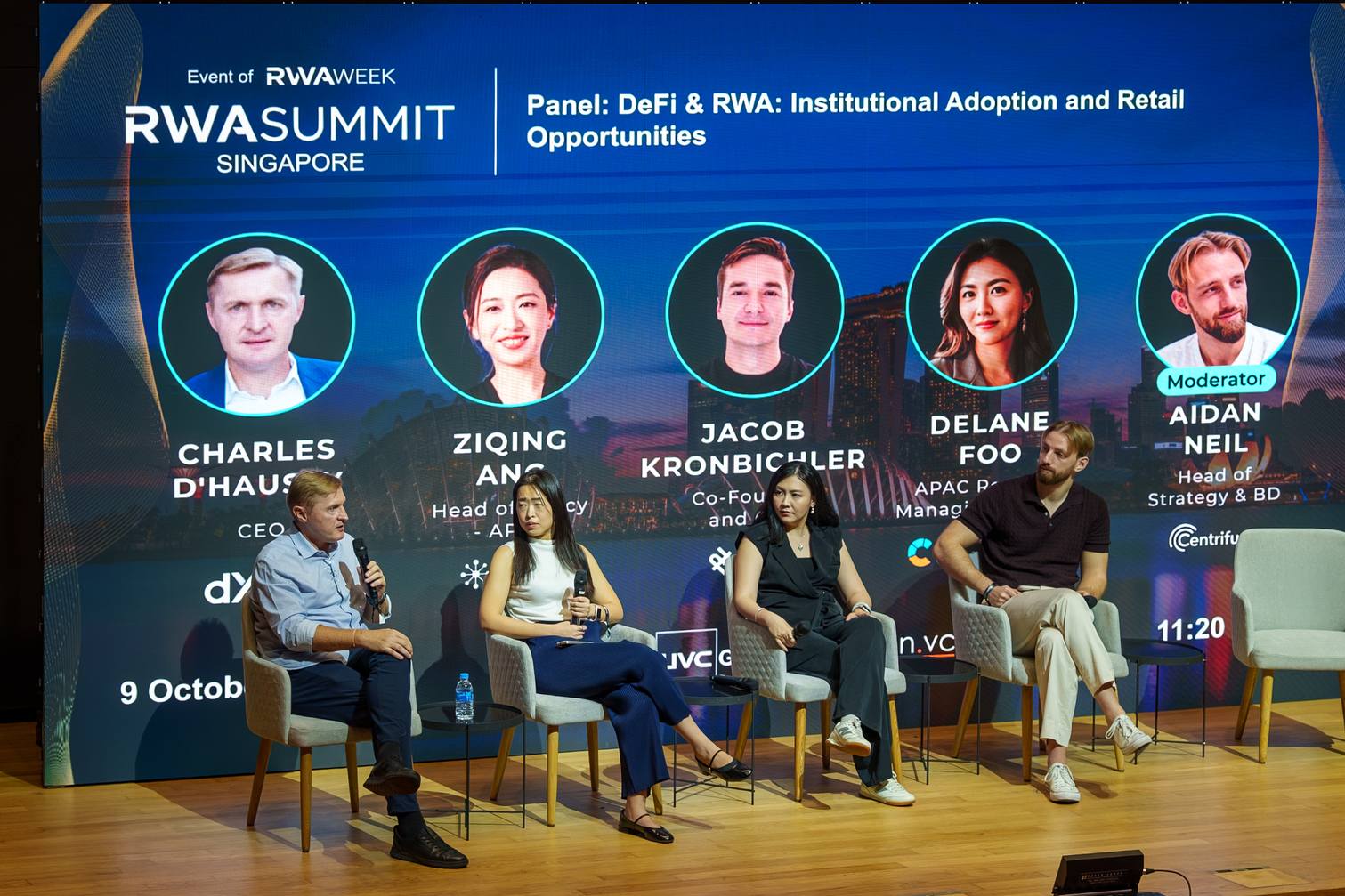
At the panel “DeFi & RWA: Institutional Adoption and Retail Opportunities,” Ziqing Ang, Head of Policy, APAC at TRM Labs, drew attention to precisely these concerns. She pondered what investors actually owned when they bought tokenised assets, whether those assets could be redeemed when needed, and how they should be valued if a liquidation took place.
In other words, she raised the question of responsibility.
In traditional finance, it’s a no-brainer. Issuers, lenders and other financial intermediaries have their respective obligations, from assessing risks to protecting investors and honouring redemption requests.
But, as a matter of fact, people tend to overlook that these obligations do not disappear when the same activities take place in decentralised finance (DeFi). They remain in place.
As Ziqing explained, if a company selects assets to be used as collateral, it must carry out proper due diligence. If it determines how much investors can borrow against them, it must manage the associated risks. The issuer, meanwhile, remains responsible for fulfilling the terms of its product, including redemption.
The difficulty comes when companies try to incorporate these requirements into financial services that were originally designed to work without traditional intermediaries.
Delane Foo, APAC Regional Managing Director at Nethermind, shared an example of how this could work. His company has been working with a Japanese securities firm to develop a regulated DeFi platform.
The idea of his platform implies that people who lack the experience or resources to assess DeFi risks themselves could access these products through a regulated financial environment. That way, they have familiar safeguards and ways to recover their funds.
It is an interesting compromise between the possibilities of decentralised finance and the established practices of traditional financial institutions.
One Asset, Several Rulebooks
“We have interoperable chains. We don’t have interoperable regs.”
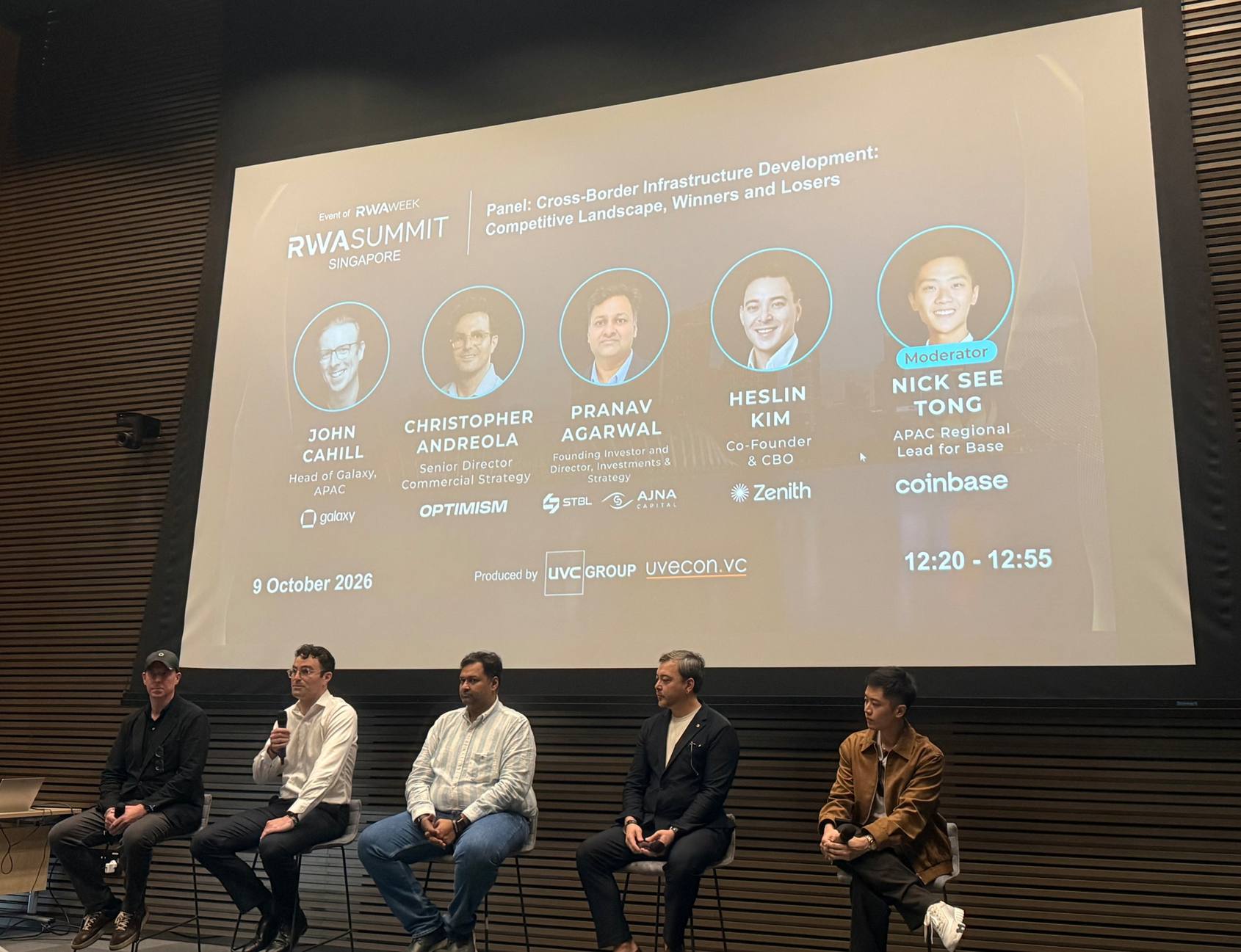
John Cahill, Head of Galaxy, APAC, put it rather neatly during the panel “Cross-Border Infrastructure Development: Competitive Landscape, Winners and Losers.”
The industry has spent years developing ways to transfer assets between different blockchain networks. Yet the laws governing those assets remain largely tied to individual countries, each with its own financial regulations and supervisory priorities.
Take a tokenised investment fund issued in Singapore, for example. Technically, its tokens could be transferred to an investor in Hong Kong, Japan or South Korea. The rub is that the fund cannot be legally offered in all three markets, as the investor may need to meet different eligibility requirements.
And the issuer, too, might have to comply with additional disclosure rules, while the local financial institution receiving the asset may be subject to its own custody and risk management obligations.
And suddenly, what was supposed to be an international financial product is confronted with several different sets of rules. In Asia, the problem looks acute the most, where major financial centres have taken various approaches to tokenisation.
Singapore has concentrated much of its efforts on institutional applications, including the Monetary Authority of Singapore’s Project Guardian, which explores tokenised investment products and transactions involving banks and asset managers.
Meanwhile, Hong Kong has been developing regulations for digital-asset businesses and tokenised financial products. In September 2026, it issued HK$20 billion in digital green bonds, incorporating tokenised deposits into settlement.
Japan has been advancing regulated digital securities through initiatives such as the Osaka Digital Exchange’s START market for trading tokenised securities. In turn, South Korea is preparing to introduce a regulated market for tokenised stocks, bonds and investment funds from February 2027.
All four markets have an interest in developing digital finance. What they do not have is a common rulebook governing every aspect of it.
A token may cross borders in seconds, but that is of little use if the receiving institution cannot legally accept it. So far, there is no way to govern tokenised assets equally throughout jurisdictions, making the promise of a truly global RWA market look like something of a pipe dream.
3. From Digital Assets to Real Financial Benefits
Money Doesn’t Wait for Monday Anymore
Three to four million dollars. That’s how much Jonathan Low, CEO at Elephants Inc., said his company previously needed to keep with each payment partner to ensure sufficient funds were always available for transactions. An expensive way to stay ready.
But with stablecoins, the company can transfer money within minutes, reducing the need to keep such large amounts with every partner in advance.
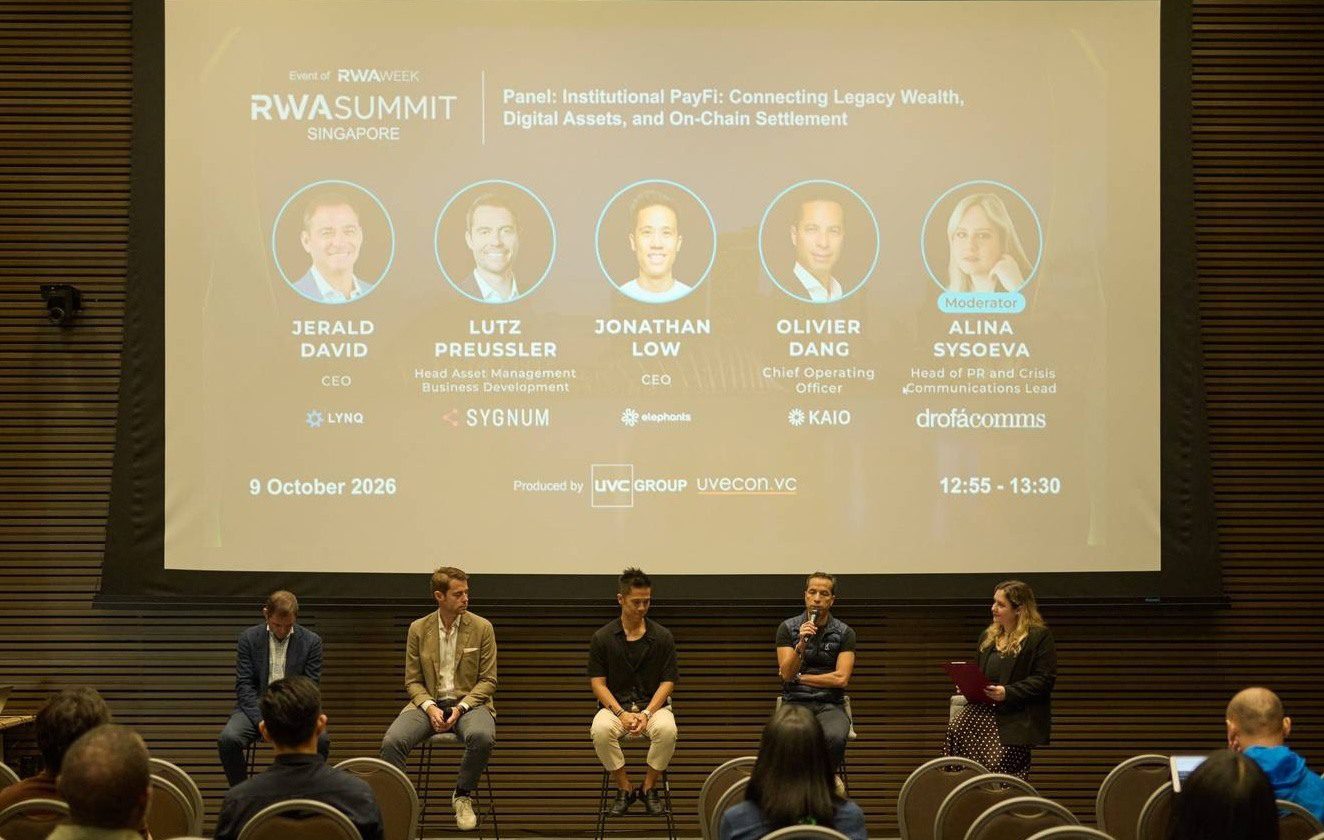
Low shared this example during “Institutional PayFi: Connecting Legacy Wealth, Digital Assets, and On-Chain Settlement,” moderated by Alina Sysoeva, Head of PR and Crisis Communications Lead at Drofa Comms.
The discussion examined what on-chain finance could actually offer institutions that already have systems for moving money, investing and managing assets. As Low’s experience suggests, one answer is freeing up capital that would otherwise risk idling.
Alina Sysoeva, who moderated the discussion, also drew attention to the financial implications of faster settlement:
“A payment that settles in minutes sounds attractive, but the real financial benefit appears when a company can keep less money tied up in advance. That frees capital for other purposes.
Of course, institutions also need to understand who takes responsibility when a payment fails and how these new arrangements meet existing compliance requirements. Those details will determine how widely these solutions can be used.”
Jerald David, CEO at Lynq, approached the same problem from the perspective of financial markets. Trading may be available outside traditional business hours, but transferring money to a broker or clearing institution during the weekend can still be difficult.
His company uses shares of tokenised money-market funds to facilitate transfers between institutional participants around the clock. This allows them to move value without relying entirely on conventional banking hours.
Lutz Preussler, Head of Asset Management Business Development at Sygnum Bank, pointed out that hedge funds already use tokenised US Treasuries as collateral. Faster transfers could help them manage their positions without waiting for the usual settlement cycle.
These are fairly concrete advantages. Money that previously had to be reserved in advance can be put to other uses, while collateral can reach counterparties when it is needed.
Even so, despite the fact that the technology allows assets to move almost instantly, bringing traditional institutions into the process remains a much longer affair.
Digital Assets Meet Everyday Payments
But what if the same advantages could reach ordinary consumers?
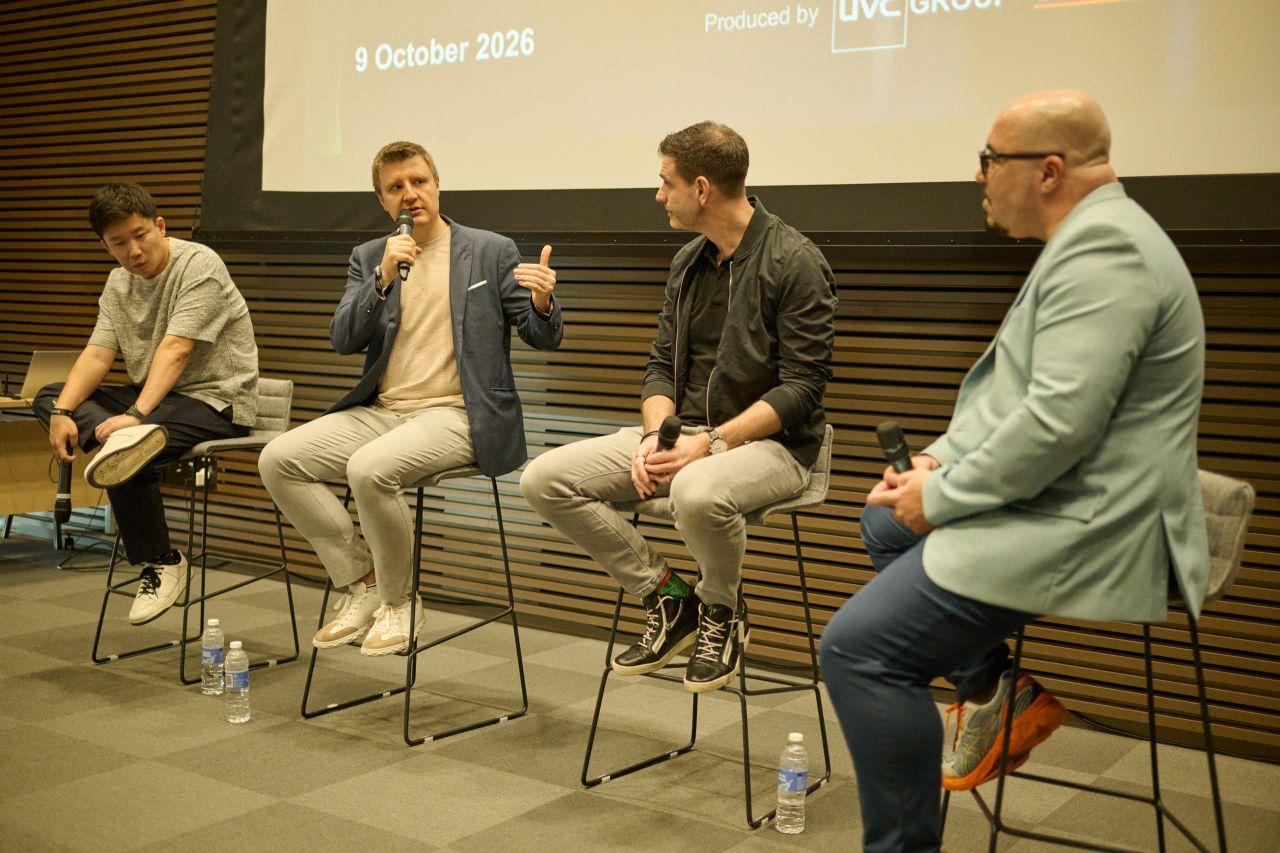
At the panel “How Many Crypto Cards Do We Need?,” moderated by Devere B of PRP Advisors, Daren Guo, Co-Founder at Reap, argued that the greatest demand for stablecoin-enabled payment cards comes from emerging markets.
In Singapore, customers already have plenty of payment options. In parts of Africa and Latin America, however, access to international payments, foreign currencies and globally accepted cards can be considerably more limited.
Andy Goldin, Chief Strategy and Data Officer at KAST, largely agreed. He explained that customers are looking for reliable ways to receive money, make purchases, convert currencies and transfer funds abroad. They are not interested in if those services rely on blockchain technology or any other innovation.
Guo also discussed the possibility of connecting payment cards to different tokenised assets. That would allow customers to access the value of their investment holdings when making payments.
For instance, an investor could use eligible securities or other tokenised holdings as collateral for a purchase without having to sell them first. Of course, this would require suitable lending arrangements and safeguards against unexpected losses.
The discussion also touched on AI agents that could execute payments on behalf of users. Goldin emphasised spending limits and other controls, while other speakers discussed the possibilities for automated microtransactions.
There is still plenty to figure out here, particularly regarding responsibility and consumer protection.
Nevertheless, these examples offer a scattered picture of the RWA market. Instead of another announcement about how many assets have been tokenised, they demonstrate various ways where those assets could grow useful when they are actually put to work.
And that is arguably a far more meaningful measure of progress.
What’s in Store for RWAs in 2027
The discussions at RWA Summit Singapore offered a useful reminder of what is really at stake right now. Trading venues, banks, regulators and payment companies are solving different parts of the problem. And so far none can make tokenisation useful on their own.
Heading into 2027, four indicators deserve greater attention:
- Secondary-market activity: investors’ ability to trade tokens after issuance;
- Institutional capital efficiency: measurable capital savings and the use of tokenised holdings as collateral;
- Legal certainty: enforceable ownership and redemption rights in cross-border transactions;
- Commercial sustainability: repeat customer activity and revenues sufficient to sustain the business.
Altogether, these indicators offer a more demanding assessment of the RWA market than the total value of assets issued on-chain. After all, a market can grow substantially in size but still be difficult to access, expensive to participate in and commercially unconvincing.
This is hardly what the RWA market needs, especially at a time when it is expanding so rapidly, having nearly doubled in value since the beginning of the year. At this pace, the industry cannot afford to let the pit between the amount of assets tokenised and their actual usefulness grow any wider.
And that is how the industry’s progress in 2027 should be measured.